
Sitemap
A list of all the posts and pages found on the site. For you robots out there, there is an XML version available for digesting as well.
Pages
Posts
Future Blog Post
Published:
This post will show up by default. To disable scheduling of future posts, edit config.yml and set future: false.
Blog Post number 4
Published:
This is a sample blog post. Lorem ipsum I can’t remember the rest of lorem ipsum and don’t have an internet connection right now. Testing testing testing this blog post. Blog posts are cool.
Blog Post number 3
Published:
This is a sample blog post. Lorem ipsum I can’t remember the rest of lorem ipsum and don’t have an internet connection right now. Testing testing testing this blog post. Blog posts are cool.
Blog Post number 2
Published:
This is a sample blog post. Lorem ipsum I can’t remember the rest of lorem ipsum and don’t have an internet connection right now. Testing testing testing this blog post. Blog posts are cool.
Blog Post number 1
Published:
This is a sample blog post. Lorem ipsum I can’t remember the rest of lorem ipsum and don’t have an internet connection right now. Testing testing testing this blog post. Blog posts are cool.
publications
IMPASTO: Multiplexed cyclic imaging without signal removal via self-supervised neural unmixing
Published in BioRxiv, 2022
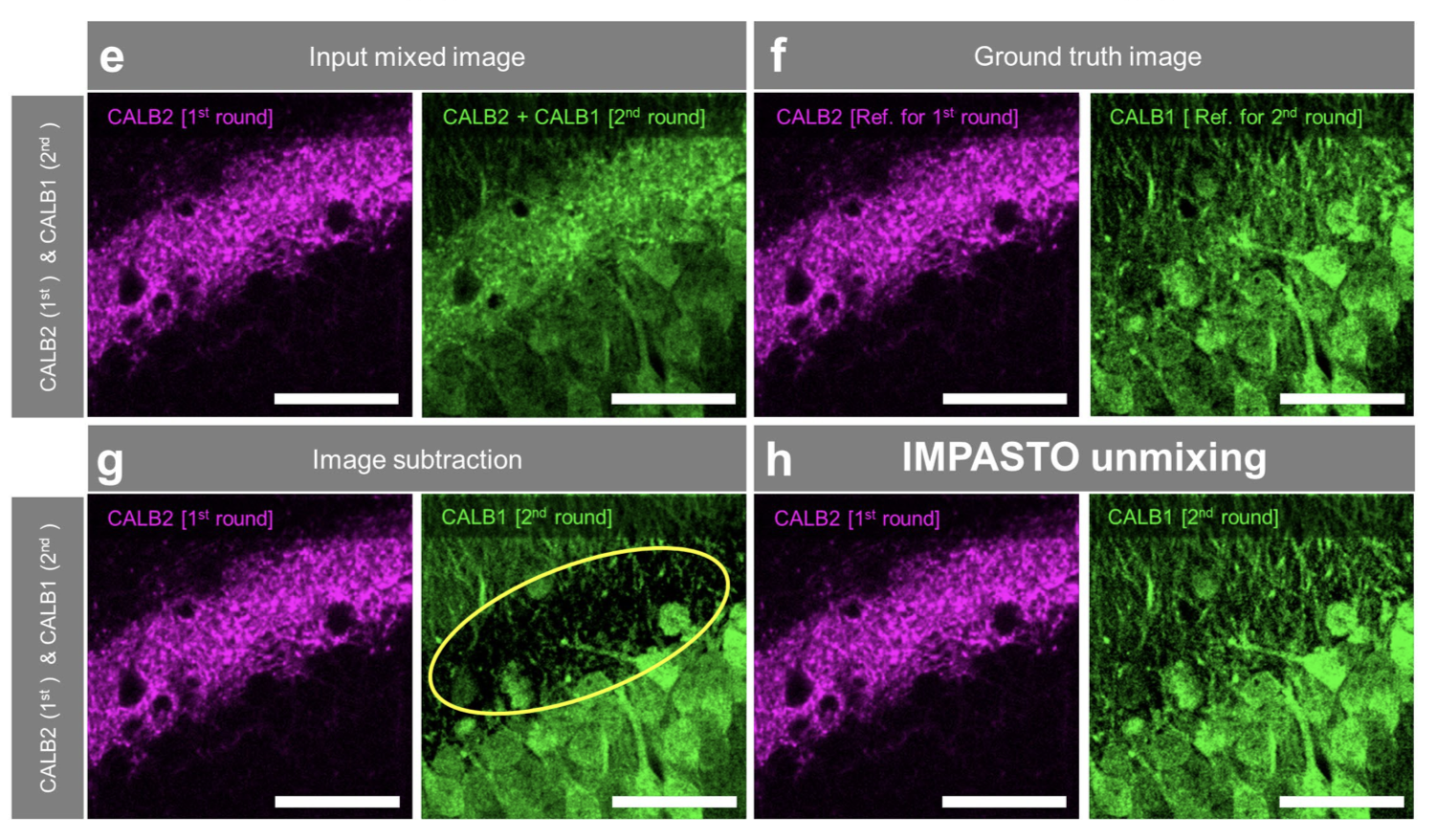 Conventional multiplexed cyclic imaging techniques have limitations, as the signal removal process can alter tissue integrity. This paper introduces IMPASTO, a novel method that iterates imaging cycles without signal removal and uses a self-supervised AI model to unmix the signals, isolating individual protein images. This technique enables high-dimensional imaging while minimizing tissue damage.
Recommended citation: H. Kim, S. Bae, J. Cho, H. Nam, J. Seo, S. Han, Euiin Yi, E. Kim, Y-G. Yoont, and J-B. Chang. (2022). "IMPASTO: Multiplexed cyclic imaging without signal removal via self-supervised neural unmixing." BioRxiv preprint.
Download Paper
Learning Spatiotemporal Representation in Nighttime Driving Video for Road Flood Detection
Published in IEEE Intelligent Transportation Systems Conference (ITSC), 2023
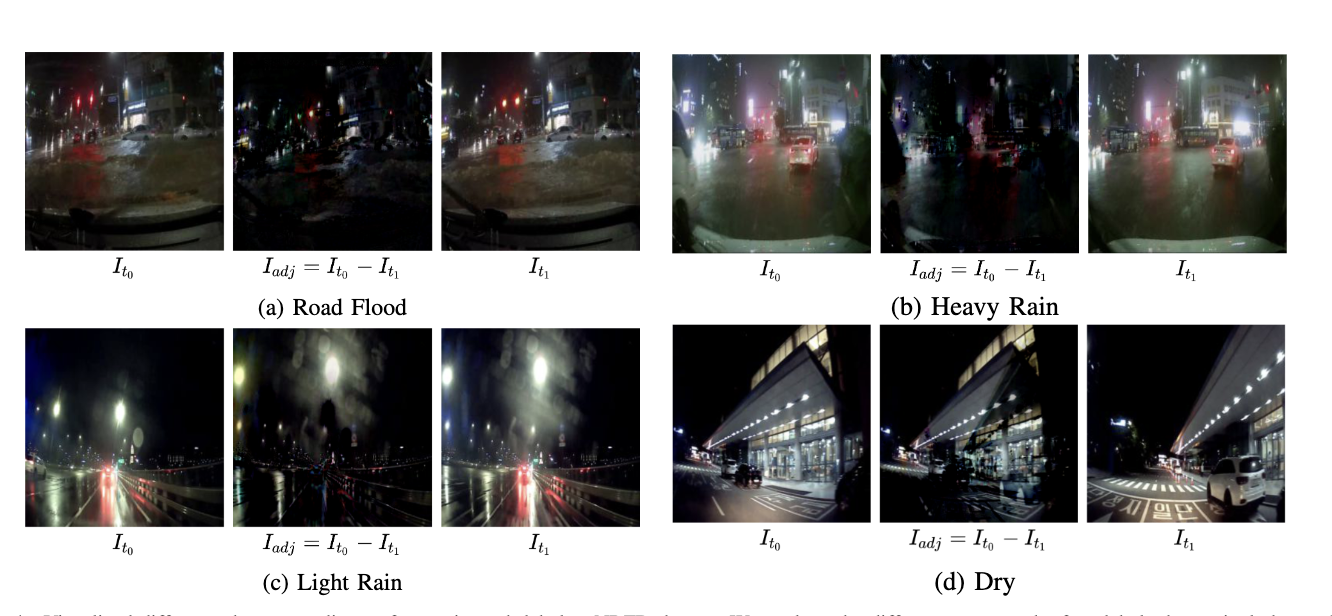 This research focuses on detecting road floods in nighttime driving videos. The study proposes a deep learning model that learns spatiotemporal representations from vehicle black-box footage to effectively detect flooded road conditions, even in low-light and poor visibility environments. The work contributes to enhancing the safety of intelligent transportation systems.
Recommended citation: Euiin Yi, H. Chung, and K. Park. (2023). "Learning Spatiotemporal Representation in Nighttime Driving Video for Road Flood Detection." IEEE Intelligent Transportation Systems Conference (ITSC).
Towards Fast Multilingual LLM Inference: Speculative Decoding and Specialized Drafters
Published in Empirical Methods for Natural Language Processing (EMNLP), 2024
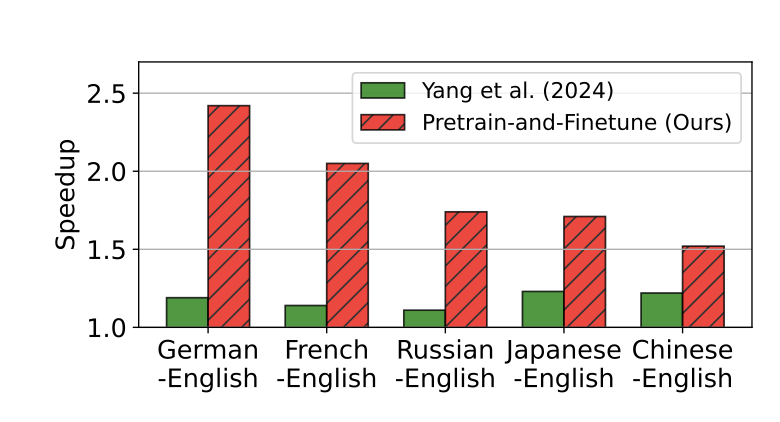 This paper addresses the high inference cost of deploying LLMs in diverse language environments. It proposes a speculative decoding method using small, language-specialized drafter models. By employing language-specific drafters optimized through pre-training and fine-tuning, this approach demonstrates a significant improvement in LLM inference speed in multilingual contexts compared to existing methods.
Recommended citation: Euiin Yi*, T. Kim*, H. Jeung, DS Chang, and S-Y. Yun. (2024). "Towards Fast Multilingual LLM Inference: Speculative Decoding and Specialized Drafters." Empirical Methods for Natural Language Processing (EMNLP).
Download Paper
Revisiting Multi-Agent Debate as Test-Time Scaling: A Systematic Study of Conditional Effectiveness
Published in ICML Workshop MAS, 2025
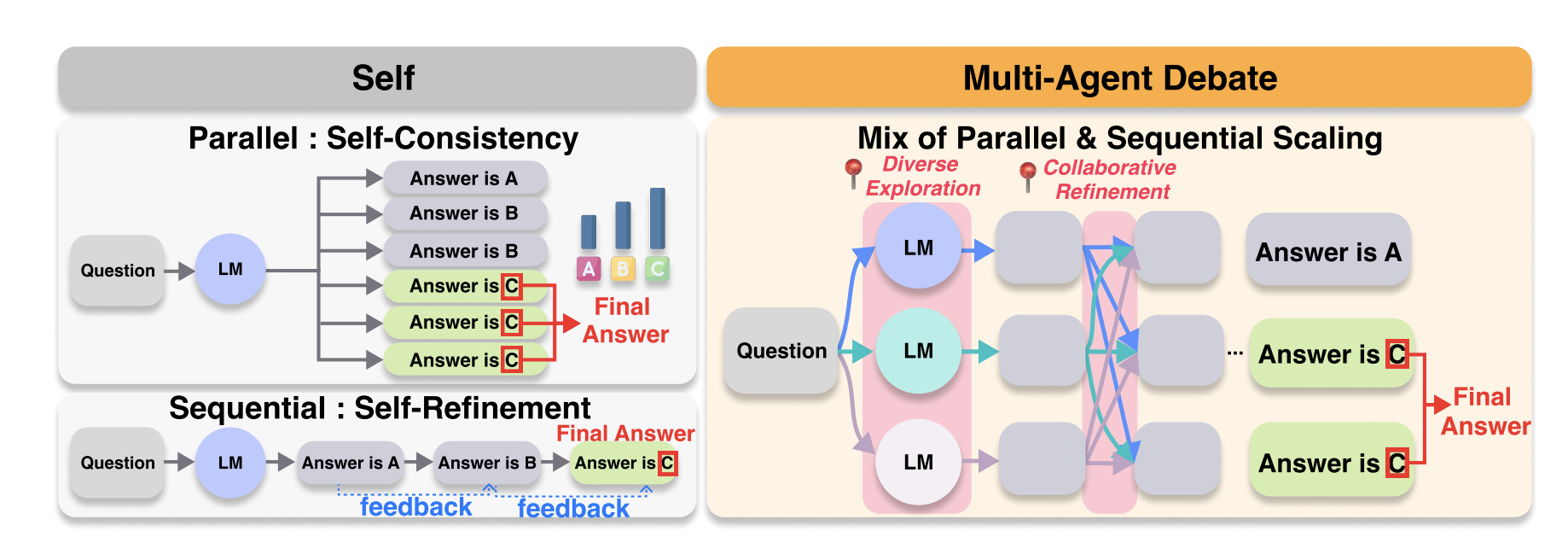 This study analyzes the effectiveness of Multi-Agent Debate (MAD) systems, where multiple LLM agents collaboratively solve problems through discussion. The research conceptualizes MAD as a test-time scaling technique and compares its performance against single agents in tasks like mathematical reasoning and safety. Findings indicate that MAD is more effective for more difficult problems or less capable models, and that agent diversity is crucial for safety-related tasks.
Recommended citation: Y Yang*, Euiin Yi*, J Ko, K Lee, and Z Jin. (2025). "Revisiting Multi-Agent Debate as Test-Time Scaling: A Systematic Study of Conditional Effectiveness." ICML MAS.
Download Paper
Guiding Reasoning in Small Language Models with LLM Assistance
Published in COLM Workshop SCARL, 2025
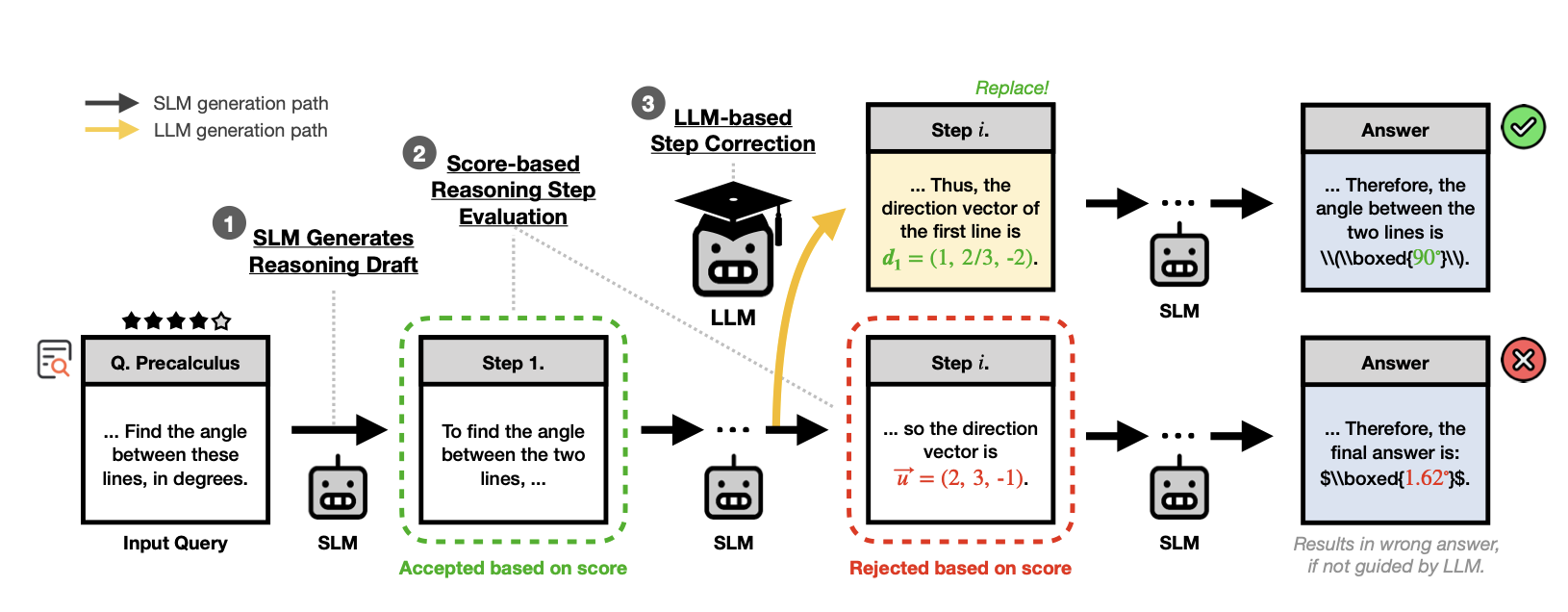 This paper proposes the SMART framework to address the challenge of Small Language Models (SLMs) in multi-step, complex reasoning tasks. An LLM selectively intervenes to assist the SLM’s reasoning process only when necessary. This approach evaluates the confidence of the SLM’s reasoning results, and if the score is low, the LLM provides a corrected reasoning step, significantly boosting SLM performance while minimizing LLM usage.
Recommended citation: Y Kim*, Euiin Yi*, M Kim, SY Yun, and T Kim. (2025). "Guiding Reasoning in Small Language Models with LLM Assistance." COLM SCARL.
Download Paper
talks
Talk 1 on Relevant Topic in Your Field
Published:
This is a description of your talk, which is a markdown file that can be all markdown-ified like any other post. Yay markdown!
Conference Proceeding talk 3 on Relevant Topic in Your Field
Published:
This is a description of your conference proceedings talk, note the different field in type. You can put anything in this field.